
How to Cover Large Windows Affordably: Real Solutions
- WINDOWCOVERINGWIZARD
- 7 days ago
- 9 min read

Covering large windows affordably means choosing from proven budget options including static-cling privacy films, ready-made curtain panels, vertical blinds, and aluminum mini blinds, all of which deliver privacy, light control, and style without custom pricing. The industry term for these solutions is “budget window treatments,” and they range from fully DIY installations to professional fits that cost a fraction of designer quotes. Whether you rent or own, the right combination of materials and technique can make a floor-to-ceiling window look intentional and polished. This guide walks you through every practical option, how to measure correctly, and how to make inexpensive treatments look like they cost three times more.
What are the most budget-friendly window treatment options for large windows?
The most cost-effective window coverings for large windows fall into four categories: privacy films, ready-made curtains, affordable blinds, and temporary DIY solutions. Each has a distinct price point, installation method, and aesthetic payoff.
Static-cling privacy film
Static-cling privacy film is the top renter-friendly option because it requires no drilling, no adhesive, and no landlord approval. You clean the glass, apply the film with water, smooth it with a squeegee, and trim the edges. It peels off cleanly when you move out. The frosted or patterned versions block sightlines during daylight hours while still letting natural light through. One critical limitation: the film works like a one-way mirror, so it reverses at night when your interior lights are brighter than the outside. Pair it with curtains for full 24-hour privacy.
Ready-made curtains and drapery panels
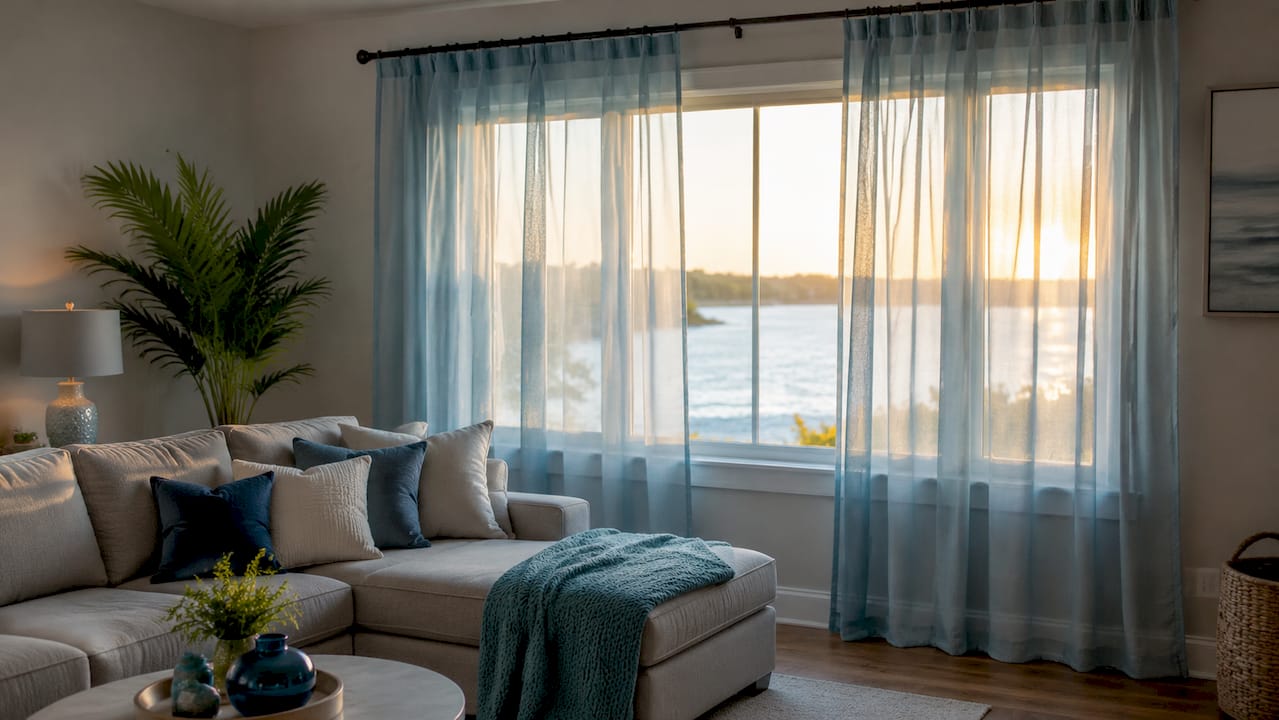
Ready-made panels from retailers like IKEA, Target, and Amazon cost between $20 and $60 per panel, making them one of the cheapest large window coverings available. The trick is buying enough panels. A common mistake is purchasing two panels for a wide window when four or six are needed to achieve proper fullness. For a 96-inch-wide window, plan for panels totaling at least 2.5 times that width in fabric. Linen-look and velvet-look fabrics photograph and read as expensive even at budget prices.
Affordable blinds for big windows
Vertical blinds, aluminum mini blinds, and woven wood blinds are the three most practical affordable blinds for big windows. Vertical blinds work especially well on sliding glass doors and wide picture windows because the slats hang from a track rather than rolling up, which eliminates the weight problem that plagues wide horizontal blinds. Aluminum mini blinds are the least expensive option per square foot. Woven wood blinds add warmth and texture at a mid-range price. Note that faux wood blinds can be heavy on very wide spans and may require a center support bracket.
Temporary and DIY solutions
Aluminum foil, paper shades, and tension-rod café curtains are genuine short-term fixes. Paper roller shades sold at hardware stores cost under $15 and install without tools. They are not attractive long-term, but they solve an immediate privacy problem while you plan a better solution.
Pro Tip: Buy curtain panels in the longest length available (usually 108 inches) even if your ceilings are lower. You can hem them with iron-on hem tape, and the extra length creates a luxurious pooling effect at the floor that reads as custom.
How to measure your large windows accurately for affordable treatments
Accurate measurement is the single step that separates a polished result from a frustrating one. A panel that is two inches too narrow or a blind that binds in the frame wastes money regardless of price point.
Decide on inside mount or outside mount. Inside mount means the treatment sits inside the window frame. Outside mount means it hangs on the wall above and outside the frame. Outside mount is almost always better for large windows because it makes the window appear taller and hides any light gaps at the edges.
Measure width at three points. Measure the width at the top, middle, and bottom of the window opening. Use the smallest measurement for inside mount orders, rounding down to the nearest 1/8 inch. For outside mount, add at least 2 inches on each side beyond the frame to block light.
Measure height at three points. Measure left, center, and right. Use the largest measurement for inside mount. For outside mount, add 2 inches above and below the frame to prevent light gaps at the top and bottom.
Measure each window individually. Even windows that look identical in the same room can differ. Discrepancies over 1/4 inch between top and bottom measurements will affect how no-drill blinds fit and whether a shade rolls evenly.
Record measurements in width-by-height order. This is the industry standard format. Writing them in reverse order is the most common ordering mistake when buying online.
For vertical blinds and panel tracks, measure the full width of the door or window opening plus the overlap you want on each side. Vertical blinds require precise width and height to operate smoothly and stack properly when open.
Pro Tip: Take photos of your measurements written on a notepad next to the window. When you are shopping online at 11 p.m. and second-guessing yourself, you will have a visual record that prevents ordering errors.
How to make budget window treatments look custom and stylish
The gap between a cheap-looking window and a designer-looking one is almost entirely about installation height, fabric fullness, and hardware quality. The fabric itself matters far less than most people think.
Hang curtains high and wide. Mount the rod just below the crown molding, not above the window frame. Extend the rod 6 to 12 inches beyond the frame on each side. This technique, confirmed by interior designers, makes windows look taller and frames the room rather than just the glass.
Add trim without sewing. Iron-on adhesive trim applied with a product like Stitch Witchery transforms a plain $25 panel into something that looks bespoke. A single band of grosgrain ribbon or Greek key trim along the leading edge costs under $10 and takes 20 minutes.
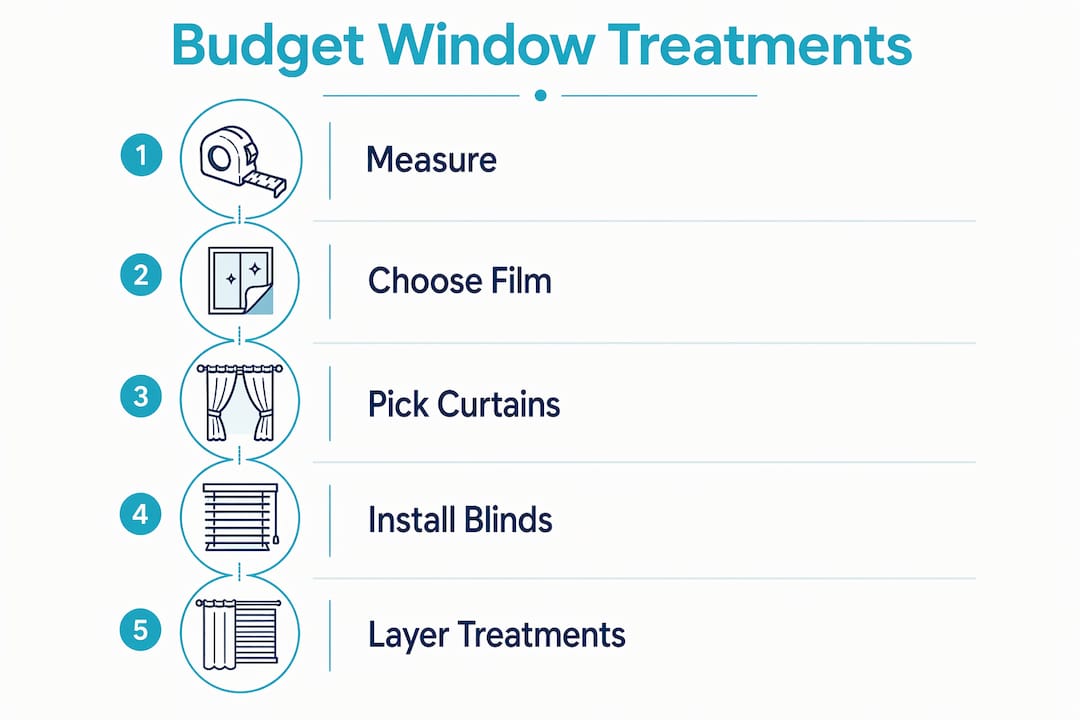
Layer blinds with drapery. A $30 roller shade paired with two $40 drapery panels creates a layered look that reads as intentional and high-end. The shade handles light control; the panels add softness and color. This combination is standard in professionally designed rooms.
Choose the right curtain rod. Oversized rods can be cut to length at home with a hacksaw, so you are not limited to standard sizes. Simple designs with minimal return and a matte or brushed finish look more expensive than ornate rods with finials. Matte black and brushed brass are both strong choices that photograph well and age gracefully.
Avoid the most common mistakes. Hanging curtains too low, using too few panels, and choosing sheer fabric for a room that needs privacy all cheapen the result immediately. Blackout or semi-opaque fabric in a solid color almost always looks more polished than a busy pattern at a budget price point.
Here is a quick comparison of styling upgrades by cost and impact:
Upgrade | Approximate cost | Visual impact |
Hang rod near ceiling | $0 (repositioning) | High |
Iron-on trim on panels | Under $15 | High |
Add a second panel per side | $20 to $50 | High |
Upgrade curtain rod | $15 to $40 | Medium |
Add tiebacks or holdbacks | $10 to $25 | Medium |
Comparing affordable window treatment options: cost, installation, and renter suitability
Choosing the right treatment depends on three factors: your budget, whether you rent or own, and how much installation complexity you can handle. This table gives you a direct comparison of the most common window covering options on a budget:
Treatment | Estimated cost (large window) | Installation | Renter-friendly |
Static-cling privacy film | $15 to $40 | No tools needed | Yes |
Paper roller shades | $10 to $20 | Tension rod or adhesive | Yes |
Aluminum mini blinds | $20 to $60 | Drill required | No |
Vertical blinds | $50 to $150 | Drill required | Conditional |
Ready-made curtain panels | $40 to $120 | Tension or drill rod | Both options exist |
Cellular shades | $60 to $200 | Drill required | No |
Woven wood blinds | $50 to $150 | Drill required | No |
Renters have the most flexibility with privacy film and tension-rod curtain systems. Homeowners get the best long-term value from cellular shades and vertical blinds because both offer durability, light control, and energy efficiency that pays back over time. For expert guidance on matching treatments to your specific windows, the window treatment selection guide from Beautiful Windows Elgin covers room-by-room considerations in useful detail.
How can layering treatments improve privacy and light control on a budget?
Layering two inexpensive treatments is the most underused strategy in budget window decorating. The combination costs more upfront than a single solution, but it delivers results that neither treatment achieves alone.
Pair privacy film with blackout curtains. Combining a day privacy film with a removable blackout layer solves the film’s nighttime limitation without spending money on full blackout coverage for every window. The film handles daytime privacy; the curtain closes at night.
Use cellular shades beneath drapery panels. Cellular shades trap air in their honeycomb cells, which reduces heat loss in winter and heat gain in summer. Adding drapery panels over them amplifies that insulating effect while giving the window a finished, layered look. This combination is a genuine cost-effective window solution for rooms with high heating or cooling bills.
Coordinate colors and textures without a designer. Choose one neutral for the shade or blind layer (white, cream, or gray) and one accent color or texture for the drapery layer. This two-layer formula works in almost any room without requiring a color consultation.
Renters vs. homeowners. Renters should focus on tension-rod curtain systems layered over privacy film. Homeowners can invest in drilled hardware and higher-quality shades knowing the installation adds value to the property. For renters exploring window shades that work across different setups, there are options that mount without permanent hardware.
Pro Tip: When layering, always install the shade or blind closest to the glass and the drapery panel farthest from it. This order maximizes light control and keeps the room looking intentional rather than cluttered.
Key takeaways
Covering large windows affordably requires choosing the right treatment type for your situation, measuring precisely, and using installation techniques that make budget materials look custom.
Point | Details |
Match treatment to renter or owner status | Renters get the most from privacy film and tension-rod curtains; owners benefit from cellular shades and vertical blinds. |
Measure at multiple points | Measure width and height at three locations each and use the smallest width for inside mount orders. |
Hang curtains high and wide | Mount rods near the ceiling and extend 6 to 12 inches beyond the frame for a custom, tailored appearance. |
Layer for full privacy | Pair daytime privacy film with blackout curtains to solve the film’s nighttime limitation affordably. |
Upgrade hardware, not fabric | A quality curtain rod and proper fullness transform a $25 panel more than switching to a $100 panel. |
What I’ve learned after years of covering big windows on a budget
Here is the honest truth about budget window treatments: most people overspend on fabric and underspend on installation technique. I have seen $200 custom panels look mediocre because they were hung two inches above the frame, and I have seen $30 IKEA panels look stunning because they were mounted at ceiling height with proper fullness.
The most overlooked affordable option is the static-cling privacy film. Renters dismiss it because it sounds temporary, but a good frosted film on a bathroom or bedroom window is genuinely attractive and lasts for years. The nighttime privacy limitation surprises people, but pairing it with a simple tension-rod curtain solves the problem for under $50 total.
The biggest renter mistake I see is drilling into walls unnecessarily. Tension rods have improved dramatically. A quality tension rod from a brand like Umbra or Meri holds heavy curtain panels without slipping, and it leaves no trace when you move out.
Layering changed how I think about window treatments entirely. A $35 roller shade and two $45 linen panels create a room that looks like it had a designer involved. The shade does the functional work; the panels do the aesthetic work. You do not need to choose between the two.
My advice: measure twice, buy the longest curtain panels available, and spend your savings on a decent curtain rod. The rod is the one place where quality shows immediately.
— Dave
Upgrade your large windows with Brandywine Blinds
If you want the look of custom window treatments without the custom price, Brandywine Blinds delivers exactly that. With over 30 years of experience serving homeowners in Chester County and the surrounding area, they offer professional-grade solutions at prices typically 30% below big-box competitors, with no franchise fees passed on to you.

Their vertical blinds are a standout option for large windows and sliding doors, combining clean lines with practical light control at a price point that fits real budgets. They also carry cellular shades and blackout and light-filtering shades for layered privacy solutions. Every installation comes backed by a lifetime service warranty. Contact Brandywine Blinds for a free in-home consultation and see what the right treatment does for your largest windows.
FAQ
What is the cheapest way to cover a large window?
Static-cling privacy film is the least expensive option, costing $15 to $40 for a large window, and requires no tools or drilling. For a more finished look, paper roller shades on tension rods cost under $20 and install in minutes.
Can renters install window treatments without drilling?
Yes. Tension-rod curtain systems and static-cling privacy film both install without drilling and leave no damage when removed. These are the two most practical renter-friendly options for large windows.
How do I make cheap curtains look expensive?
Hang the rod near the ceiling rather than above the window frame, use enough panels for 2.5 times the window width in fabric fullness, and add iron-on trim to the leading edge of each panel. Hardware quality matters more than fabric price.
Are vertical blinds good for large windows?
Vertical blinds are one of the best affordable blinds for big windows because the slats hang from a track, which eliminates the weight and sagging problems common with wide horizontal blinds. They work especially well on sliding glass doors and picture windows.
How much should I add when measuring for outside-mount blinds?
Add at least 2 inches on each side of the window frame for width and 2 inches above and below for height. This overlap blocks light gaps and makes the window appear larger than the glass area alone.
Recommended
Comments