
What Are Custom Window Treatments for Your Home
- WINDOWCOVERINGWIZARD
- Jun 11
- 8 min read
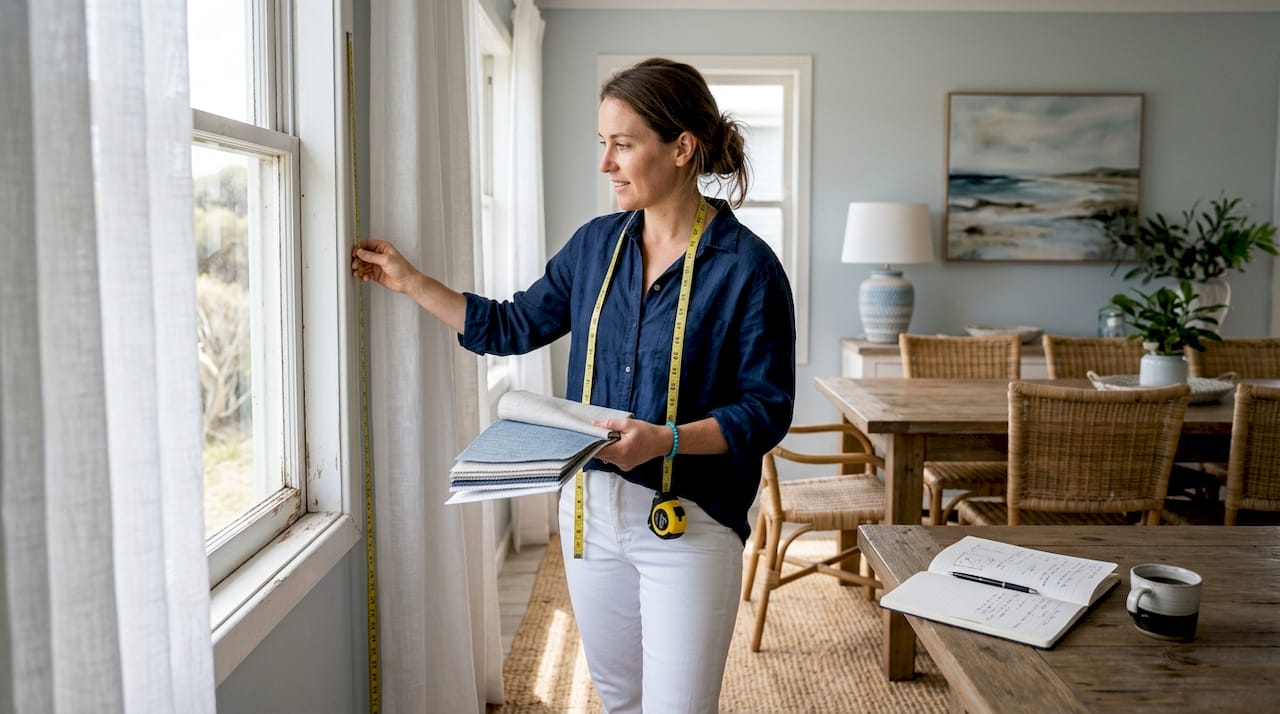
Custom window treatments are made-to-measure window coverings designed to fit your exact window dimensions, delivering precise light control, privacy, and style that off-the-shelf products cannot match. Unlike standard retail options, custom treatments are fabricated to your specifications, whether that means a 47-inch cellular shade for an oddly shaped bay window or floor-length drapes that pool perfectly on hardwood floors. The industry term for this category is “made-to-measure window coverings,” though custom window treatments is the phrase most homeowners use when searching for solutions. Types include blinds, shades, draperies, shutters, and curtains, each available in hundreds of fabrics, finishes, and operating systems including Hunter Douglas PowerView motorization and premium blackout linings.
What are custom window treatments and how do they differ from ready-made?
Custom window treatments are window coverings built to the precise measurements of a specific window, rather than cut from a fixed set of standard sizes. A ready-made blind from a big-box retailer comes in increments of two or four inches, which means you are always compromising on fit. A custom treatment is fabricated after your window is measured, so the coverage is exact and the finished look is intentional rather than approximate.
The distinction matters more than most homeowners realize. Made-to-measure draperies can make windows appear taller and ceilings feel higher, changing the perceived proportions of a room entirely. That effect is impossible when curtain panels are two inches too short or a shade leaves a visible gap on one side.
Custom treatments also give you access to materials and operating systems that retail stores do not stock. Bespoke window shades can be ordered in solar fabrics that block UV rays without eliminating the view, or in room-darkening textiles with thermal backing. The customization extends to hardware, lining, pleat style, and control method, giving you a finished product that functions as a design element rather than an afterthought.

What types of custom window treatments are available?
The five main categories of custom window covering options are blinds, shades, draperies, shutters, and curtains. Each serves a different combination of aesthetic and functional needs.
Treatment type | Best use case | Key feature |
Cellular shades | Bedrooms, energy-conscious homes | Honeycomb structure traps air for insulation |
Roller shades | Modern interiors, home offices | Clean profile, available in solar or blackout fabric |
Roman shades | Living rooms, dining rooms | Soft fabric folds, decorative impact |
Plantation shutters | Traditional or transitional homes | Durable, adjustable louvers, adds resale value |
Custom draperies | Formal rooms, floor-to-ceiling windows | Maximum design flexibility, layering capability |
Vertical blinds | Sliding doors, large windows | Easy light control across wide spans |
Layered treatments like sheer plus blackout combinations provide maximum flexibility for light control and privacy. Sheers diffuse harsh sunlight during the day while blackout drapes ensure complete darkness at night. This layering approach is especially effective in bedrooms and media rooms where light conditions change throughout the day.
Motorization is now a standard option across most treatment types. Motorized shades controlled by smartphone apps or automated schedules regulate indoor temperature by opening or closing based on sunlight and time of day. For apartments and homes with hard-to-reach windows, motorization is not a luxury. It is the practical choice.
Pro Tip: When exploring custom drapery options, order fabric samples and hold them against your wall color in both natural and artificial light before committing. Colors shift dramatically between a showroom and your actual room.
What are the benefits of custom window treatments over ready-made options?
The benefits of custom window treatments fall into four clear categories: fit, function, energy performance, and longevity.
Perfect fit. Custom treatments eliminate the gaps, bunching, and visual awkwardness that come with standard sizing. A precisely fitted shade covers the entire window opening, which matters both aesthetically and functionally.
Superior light and privacy control. Because the treatment fits the window exactly, you control exactly how much light enters and from which angle. Cellular shades and blackout linings enhance energy savings by improving window insulation year-round, reducing both heat loss in winter and heat gain in summer.
Energy efficiency. This is one of the most underappreciated benefits of custom curtains and shades. Properly fitted cellular shades create an insulating air pocket between the fabric and the glass, which reduces the load on your HVAC system. Pairing this with home insulation upgrades produces compounding savings on energy bills.
Long-term durability. Quality materials and fabrication produce window treatments that function well for over a decade with proper care. Ready-made options, typically made with lighter components, often need replacement within three to five years.
Smart home integration. Motorized blinds and blackout layering systems manage light, privacy, and ease of operation in apartments and homes with automated schedules and phone control.
The upfront cost of custom treatments is higher than retail alternatives, but the math favors custom when you factor in replacement cycles, energy savings, and the resale value that well-fitted, quality window treatments add to a home.
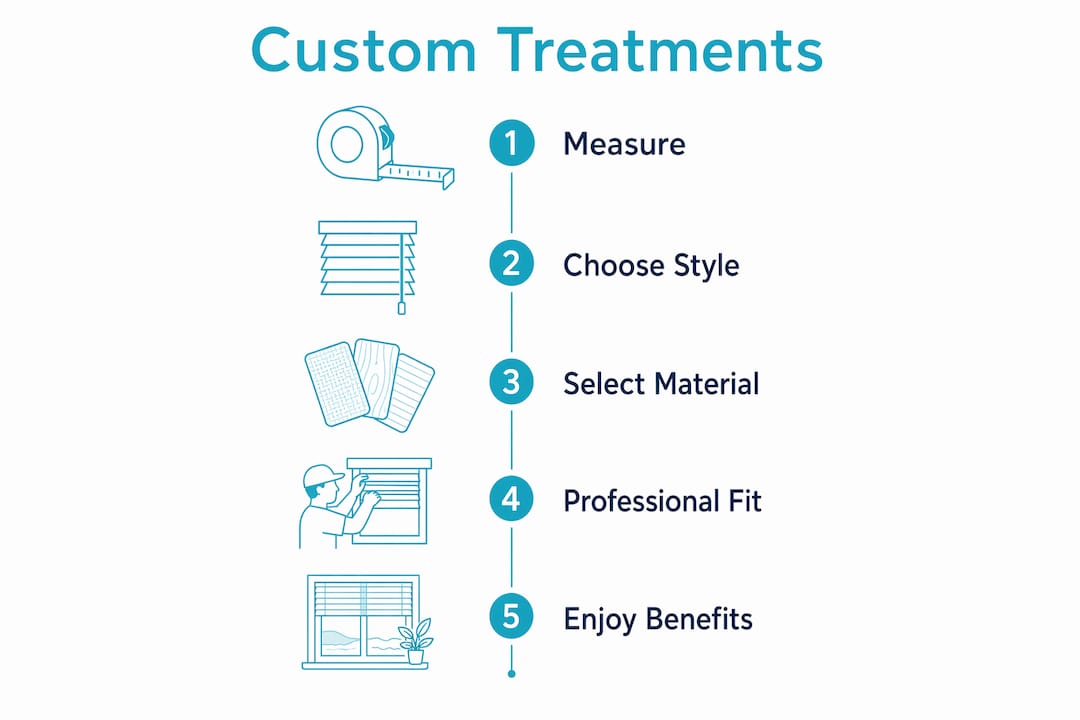
How are custom window treatments specified and installed?
Getting custom window treatments right requires a structured process. Skipping any step introduces errors that are expensive to correct after fabrication.
Professional measurement. Custom window treatments require professional measurement to achieve a precise fit and function. A trained installer measures width and height at multiple points because windows are rarely perfectly square, especially in older homes.
Design consultation. Professional in-home consultations provide design guidance and help select materials suited to room lighting and décor. Assessing windows in natural light with physical fabric samples produces far better results than choosing from a digital catalog.
Hardware and mounting selection. Decide between inside mount and outside mount, and choose rods, tracks, or motorized lift systems based on the treatment type and window depth. Outside mounts make windows appear larger and are the standard choice when window depth is shallow.
Fabrication review. Before installation, confirm the order specifications match your measurements and design choices. Errors caught at this stage cost nothing. Errors caught after installation are costly.
Professional installation. Correct installation affects both appearance and function. Drapery panels hung too low or a shade mounted off-center undermines the entire investment.
Pro Tip: When you specify custom window treatments for clients or your own home, always measure the window in three places vertically and three places horizontally. Use the smallest measurement for inside mounts to guarantee the treatment clears the frame without binding.
How to choose window treatments for different rooms
Choosing the right custom window covering options depends on three factors: how you use the room, how much natural light it receives, and what your interior style requires.
Bedrooms benefit most from layered treatments. A sheer roller shade handles daytime privacy while a blackout shade or lined drapery panel blocks light completely for sleep. Motorized options are especially practical here because you can schedule shades to open gradually in the morning.
Living rooms are where decorative impact matters most. Custom Roman shades or floor-length draperies add architectural weight to the room. For large picture windows, solar shades preserve the view while cutting glare on screens and protecting furniture from UV fading.
Kitchens and bathrooms require moisture-resistant materials. Faux wood blinds, aluminum blinds, or roller shades in coated fabrics hold up in high-humidity environments where real wood or untreated textiles would warp or mildew.
Home offices need flexible light control. A top-down, bottom-up cellular shade lets you bring in natural light from the upper portion of the window while maintaining privacy at eye level.
Apartments present unique challenges because window sizes are often non-standard and installation options may be restricted. Motorized shades with scheduled controls and phone integration solve both the access problem and the convenience problem simultaneously.
For large or awkward windows, including skylights, arched windows, and sliding glass doors, custom fabrication is the only practical path. Standard sizes simply do not exist for these configurations, and a poor fit on a prominent window undermines the entire room.
Key takeaways
Custom window treatments deliver measurable improvements in fit, energy efficiency, and design quality that ready-made options cannot replicate, making them the practical choice for homeowners who want lasting results.
Point | Details |
Definition matters | Custom treatments are made-to-measure, not cut from standard retail sizes. |
Fit drives every benefit | Precise fit eliminates gaps, improves insulation, and creates intentional design impact. |
Energy savings are real | Cellular shades and blackout linings reduce heat loss and gain year-round. |
Process prevents errors | Professional measurement and in-home consultation are required for a correct result. |
Room use guides selection | Match treatment type to light needs, humidity, and window size for each specific room. |
Why I think most homeowners underestimate what window treatments actually do
After years of working with homeowners on window treatment selections, the pattern I see most often is this: people treat window coverings as the last item on the renovation checklist, chosen quickly and on a reduced budget after everything else is done. That is exactly backwards.
Window treatments are the element that ties a room’s architecture together. I have seen a modest living room transformed entirely by floor-length custom draperies hung close to the ceiling. The room did not change. The furniture did not change. But the proportions shifted completely, and the space felt finished in a way it never had before. That effect is not available from a $40 panel set at a home improvement store.
The other misconception I encounter regularly is that motorization is a premium add-on for tech enthusiasts. It is not. For anyone with windows above a sofa, behind a headboard, or in a two-story great room, motorization is the only way to actually use the treatment you paid for. A shade you cannot reach conveniently is a shade that stays in one position permanently.
My honest advice: treat the window treatment budget as part of the room design budget, not a separate afterthought. Consult with a specialist before you finalize your paint color or furniture placement. The sequence matters because custom treatments for your interiors inform everything from how much natural light you want to preserve to whether a wall color reads warm or cool at different times of day.
— Dave
See what Brandywine Blinds can do for your windows
Brandywine Blinds has spent over 30 years helping homeowners and apartment dwellers in Chester County, PA find custom window treatments that fit their windows, their style, and their budget. Their local experts handle everything from in-home measurement to professional installation, covering cellular shades, plantation shutters, vertical blinds, motorized systems, and more. Because Brandywine Blinds operates without corporate franchise overhead, their pricing runs up to 30% below larger competitors, and every installation is backed by a lifetime service warranty. Schedule a free in-home consultation to see fabric samples in your actual light and get measurements done correctly the first time.
FAQ
What are custom window treatments exactly?
Custom window treatments are made-to-measure window coverings fabricated to fit your specific window dimensions, rather than cut from standard retail sizes. They include blinds, shades, draperies, shutters, and curtains, each available in a wide range of materials and operating systems.
How do custom treatments improve energy efficiency?
Cellular shades and blackout linings improve thermal insulation by creating an air barrier between the fabric and the glass, reducing heat loss in winter and heat gain in summer. Motorized shades can also be programmed to adjust automatically based on sunlight, further reducing HVAC load.
Are custom window treatments worth the higher cost?
Quality materials and professional fabrication produce treatments that function well for over a decade, compared to the three-to-five-year lifespan typical of ready-made options. The combination of durability, energy savings, and design impact makes custom treatments the stronger long-term investment.
What is the difference between custom and bespoke window shades?
Bespoke window shades and custom shades refer to the same concept: window coverings made specifically for your window’s dimensions and design requirements. “Bespoke” is the traditional British term; “custom” is the standard American industry term for the same made-to-measure process.
How do I choose window treatments for an apartment?
Focus on inside-mount treatments that do not require permanent wall modifications, and consider motorized options for windows that are hard to reach. Layered shades combining sheers and blackout panels give you full control over light and privacy without requiring multiple hardware installations.
Recommended
Comments