
Why Blinds Need Professional Installation: 2026 Guide
- WINDOWCOVERINGWIZARD
- 5 days ago
- 8 min read
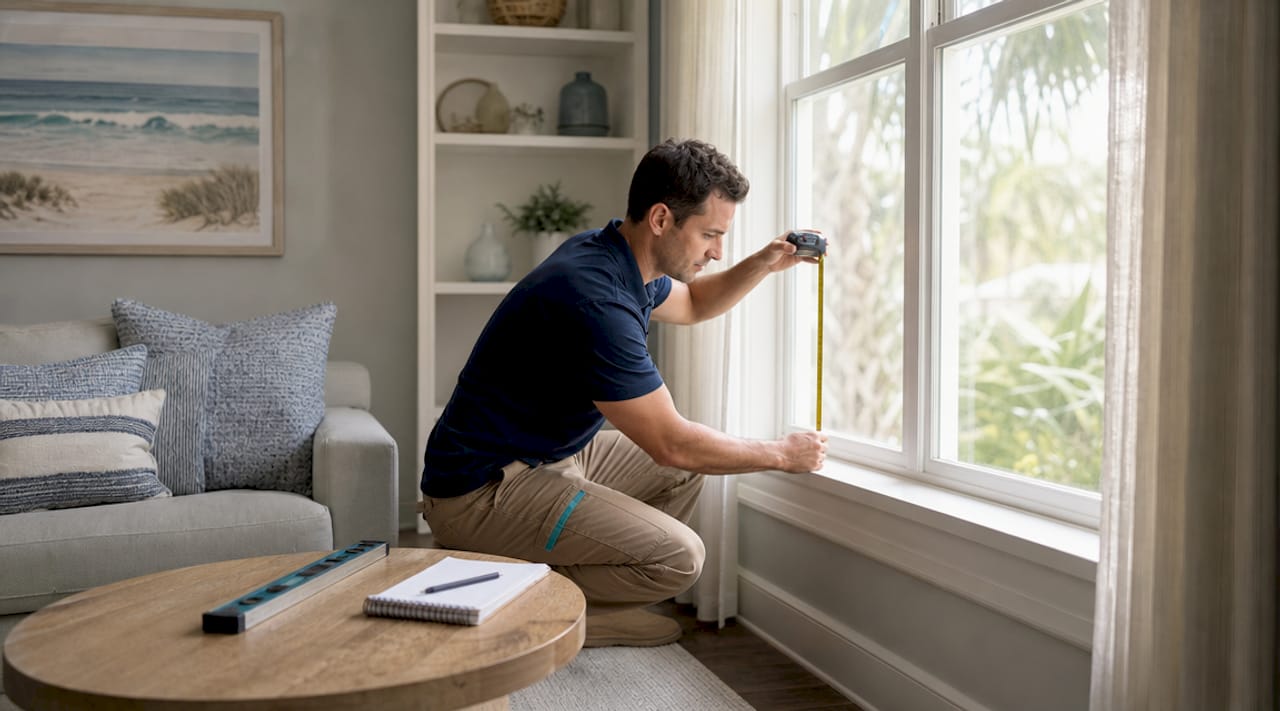
Professional blind installation is the process of measuring, fitting, and securing window treatments by trained specialists who guarantee a precise, functional result from day one. Most homeowners underestimate how much can go wrong with a DIY attempt. Incorrect DIY installation contributes to problems in roughly 25% of all home improvement projects, including misaligned blinds and damaged hardware. That number means one in four self-installed sets of blinds will eventually need a professional fix, often at a cost that exceeds what the original installation would have run. Understanding why blinds need professional installation starts with recognizing that window treatments are precision products, not furniture you assemble with an Allen wrench.
Why professional blind installation starts with accurate measurement
Measurement is where most DIY blind projects fail before a single bracket hits the wall. Windows are almost never perfectly square. Walls shift, frames settle, and even new construction can have openings that are wider at the top than the bottom by a quarter inch or more. Professionals measure three points on every window, top, middle, and bottom, to catch that skew before it causes jamming or visible gaps. A single measurement taken at one point is how homeowners end up with a blind that rattles in the frame or refuses to lower past the halfway mark.
The choice between a recess fit (inside mount) and an outside mount is another decision that depends entirely on precise measurement. A recess fit requires a minimum depth in the window frame. If that depth is even slightly off, the blind will catch on the frame every time it moves. Professionals recognize these building quirks and recommend the correct mounting method based on what the window actually allows, not what the homeowner assumes.
The financial stakes of a measurement error are higher than most people expect. Made-to-measure blinds cannot be easily returned or modified once cut to size. If your measurements are off by even a fraction of an inch, you are looking at a full replacement order. Custom blind manufacturing typically takes two to three weeks, so an error does not just cost money. It costs weeks of living with bare windows.
Measure width at top, middle, and bottom; use the smallest dimension for inside mounts
Measure height on the left, center, and right; use the longest for inside mounts
Confirm minimum recess depth before ordering any inside-mount blind
Account for window hardware, handles, and cranks that could obstruct the blind
Pro Tip: If you are ordering custom blinds and measuring yourself, always deduct a small allowance (typically 1/4 inch from width) to prevent binding. Professional installers know the exact deduction for each blind type and manufacturer.
What makes professional installation harder than it looks
The physical act of hanging a blind looks simple on a YouTube tutorial. The reality involves wall substrates, load-bearing concerns, and tools that most homeowners do not own. Specialized drill bits and anchoring methods are required for diverse wall types like plaster, brick, or tile to prevent cracking and secure the brackets properly. Drilling into a plaster wall with a standard wood bit does not just strip the hole. It can crack a large section of the wall surface, turning a one-hour project into a repair job.
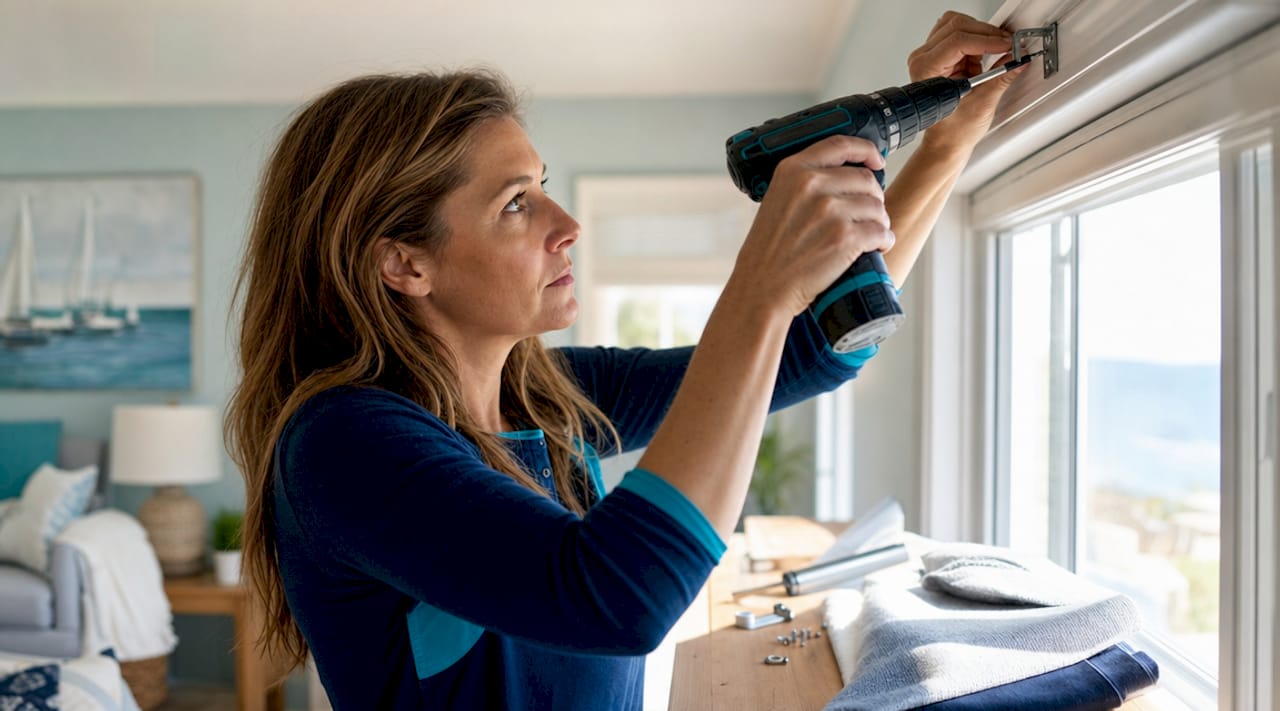
Motorized blinds add a separate layer of complexity that goes well beyond drilling. Motorized blinds require wiring knowledge, smart home setup, and battery placement expertise that is included in professional installation packages. Connecting a motorized shade to a Google Home or Amazon Alexa system, programming travel limits, and pairing remote controls are tasks that require familiarity with the specific brand’s software. A misconfig during setup can void the product warranty entirely.
Here is the sequence a professional installer follows for a motorized blind project:
Confirm wall substrate and select correct anchors for the bracket load
Mark bracket positions using a laser level for perfect horizontal alignment
Drill pilot holes with the correct bit for the wall material
Secure brackets and test for wobble before hanging the blind
Mount the blind, set upper and lower travel limits in the motor controller
Pair the remote or smart home hub and test all programmed scenes
Secure all wiring and install any required cord tidies or safety tensioners
Safety compliance is a factor that rarely appears in DIY guides. Standards like EN 13120 require professional fitting of cord tidies, tensioners, and breakaway connectors to reduce hazards to children and pets. A professional installer knows these requirements and builds them into every job. A homeowner following a box insert does not.
Pro Tip: Before any motorized blind installation, confirm whether your home’s Wi-Fi router is within reliable range of the window location. Dead zones near exterior walls are more common than expected and will cause connection failures after installation.
How proper fitting improves energy efficiency and home aesthetics
A blind that fits correctly does more than look good. Professional installation maximizes energy efficiency by creating a snug, gap-free seal that traps insulating air and minimizes drafts. That seal is only possible when the blind sits at the exact depth and width the window requires. A blind that is a half-inch too narrow leaves a channel on each side where cold air flows freely in winter and heat pours in during summer.
Cellular shades, in particular, depend entirely on a precise fit to deliver their insulating benefit. The honeycomb structure in a cellular shade traps air in individual pockets, but only if the shade covers the full window opening without gaps. A poorly fitted cellular shade is essentially a decorative panel with no thermal value. Professionally fitted cellular shades perform as designed because the installer verifies the fit before leaving.
Benefit | DIY installation | Professional installation |
Draft prevention | Gaps common due to measurement error | Snug seal verified on site |
Thermal insulation | Reduced by side gaps | Maximized by correct fit |
Aesthetic alignment | Uneven or tilted appearance common | Level, consistent finish |
Product lifespan | Shortened by incorrect tension | Extended by proper setup |
“Properly installed blinds do not just look better. They perform better, last longer, and pay back their installation cost through lower energy bills and fewer replacements.”
Appearance is the other half of this equation. A blind that hangs even slightly off-level is immediately visible to anyone who walks into the room. DIYers often overtighten or undertighten mechanisms causing premature spring failure and fabric fraying, while professionals set optimal tension for durability. Correct tension also keeps the blind hanging straight over time. A blind that sags or tilts after six months is almost always a tension problem set at installation.
Professional vs DIY blind installation: cost, time, and risk
DIY installation has a real appeal. You save on labor, you work on your own schedule, and for a single standard window with a basic aluminum blind, it is genuinely manageable. The risk profile changes fast when the project involves custom sizes, complex windows, bay windows, or motorized systems. These are the projects where the hidden costs of DIY mistakes consistently outweigh the money saved on installation.
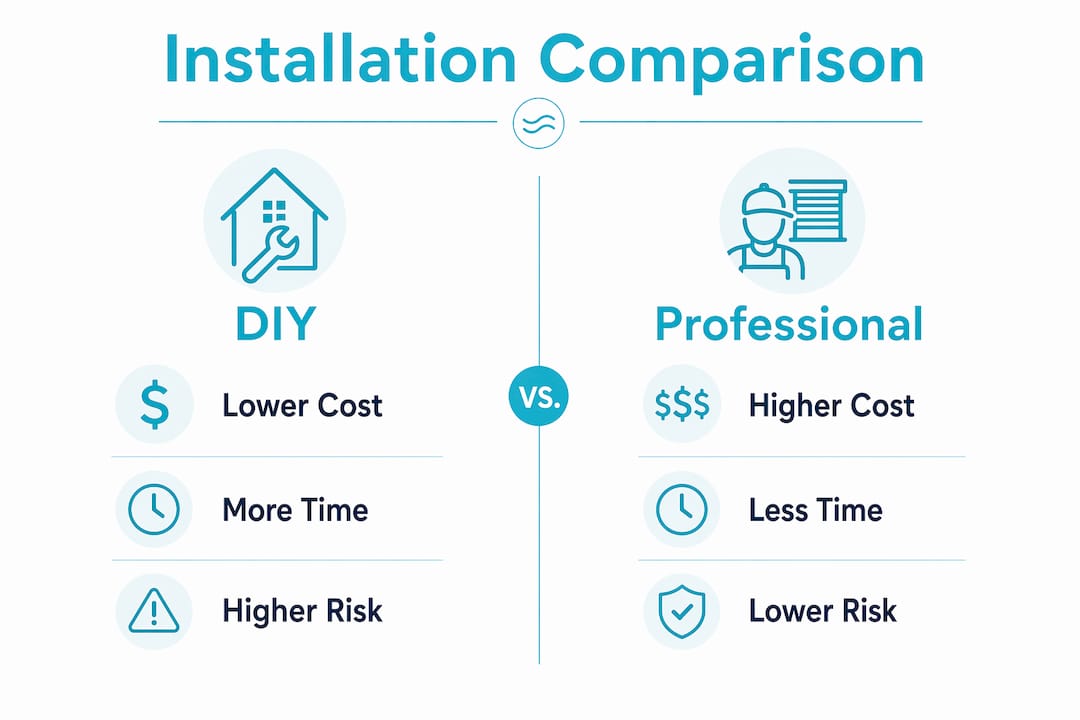
Factor | DIY | Professional |
Upfront cost | Lower (labor only) | Higher (includes service fee) |
Risk of error | High for custom or complex windows | Low, with accountability |
Warranty coverage | Product only | Product plus workmanship |
Time investment | Several hours per window | Handled by installer |
Repair burden | Falls on homeowner | Covered by service warranty |
Professional installers provide warranty and accountability on workmanship, relieving homeowners from complex repair burdens. That warranty is not a minor perk. It means that if a bracket pulls from the wall six months after installation, the installer returns and fixes it at no charge. A DIY installation has no such protection. The homeowner owns every mistake.
The scenarios where DIY makes sense are narrow but real:
Single standard-size window with a stock blind (not custom ordered)
Drywall construction with no tile, plaster, or brick
No motorization, no smart home integration
Homeowner has a drill, level, and basic measuring experience
Outside those conditions, the importance of expert blind fitting becomes a financial argument, not just a quality argument. One botched custom order, one cracked plaster wall, or one voided motor warranty will cost more than a professional installation ever would.
Key takeaways
Professional blind installation delivers precise fit, long-term durability, and energy performance that DIY methods cannot reliably match, making it the higher-value choice for custom and complex window projects.
Point | Details |
Measurement accuracy matters | Professionals measure three points per window to prevent gaps, jamming, and costly reorders. |
Wall substrate knowledge | Correct drill bits and anchors for plaster, brick, or tile prevent structural damage. |
Energy efficiency depends on fit | A snug, gap-free seal is only achievable with precise professional measurement and installation. |
Motorized blinds require expertise | Wiring, smart home integration, and motor programming require specialist knowledge to avoid warranty voids. |
Workmanship warranty protects you | Professional installation includes accountability for repairs, a protection DIY cannot offer. |
What 30 years of installations taught me about DIY blind projects
I have seen the full range of DIY blind outcomes, from perfectly hung aluminum mini-blinds in a rental apartment to a set of custom wood blinds that cost $1,400 and could not be installed because the homeowner measured the wrong dimension. The honest truth is that most homeowners who attempt DIY blind installation are not bad at home improvement. They are working with incomplete information about how unforgiving window treatments are as a product category.
The part that surprises people most is the energy efficiency angle. Homeowners spend real money on insulation, weatherstripping, and HVAC upgrades, then hang blinds with a quarter-inch gap on each side and wonder why their heating bills stay high. A properly fitted real wood blind or cellular shade is part of your home’s thermal envelope. It only works as designed when it fits correctly.
My other consistent observation is that people underestimate the cumulative cost of small errors. A stripped anchor here, a cracked plaster edge there, a custom blind that needs to be reordered because the width was off by three-eighths of an inch. None of those feel catastrophic in isolation. Together, they add up to a project that cost more than professional installation and looks worse. For standard windows with stock blinds, go ahead and do it yourself. For anything custom, motorized, or architecturally complex, call a professional. The math always works out in your favor.
— Dave
Get expert blind installation from Brandywineblinds
If you are ready to move from research to results, Brandywineblinds brings over 30 years of installation expertise directly to your home. Their local specialists handle everything from precise measurement to final fitting, with a lifetime service warranty that protects your investment long after installation day.

Whether you are considering vertical blinds for a large sliding door, motorized window treatments for a smart home setup, or custom shades for an awkward bay window, Brandywineblinds offers options at rates typically 30% lower than big box competitors. Schedule a free in-home consultation and get measurements done right the first time.
FAQ
Why can’t I just measure and install blinds myself?
Most windows are not perfectly square, and made-to-measure blinds cannot be modified once cut. A measurement error means a full replacement order, often after a two to three week wait.
What does professional blind installation typically include?
Professional installation packages include on-site measurement, bracket mounting, blind fitting, and for motorized systems, motor programming and smart home integration. Most reputable installers also include a workmanship warranty.
How does professional installation improve energy efficiency?
A gap-free seal traps insulating air and blocks drafts that a poorly fitted blind cannot prevent. Cellular shades in particular only deliver their thermal benefit when fitted precisely to the window opening.
When is DIY blind installation actually acceptable?
DIY works for single standard-size windows with stock blinds, drywall construction, and no motorization. Complex windows and motorized blinds require expertise that goes beyond a typical homeowner’s toolkit.
What are the risks of improper blind installation?
Risks include cracked walls from wrong drill bits, voided product warranties, premature spring failure from incorrect tension, and safety hazards from improperly fitted cord systems. DIY installation errors affect roughly 25% of home improvement projects involving window treatments.
Recommended
Comments